
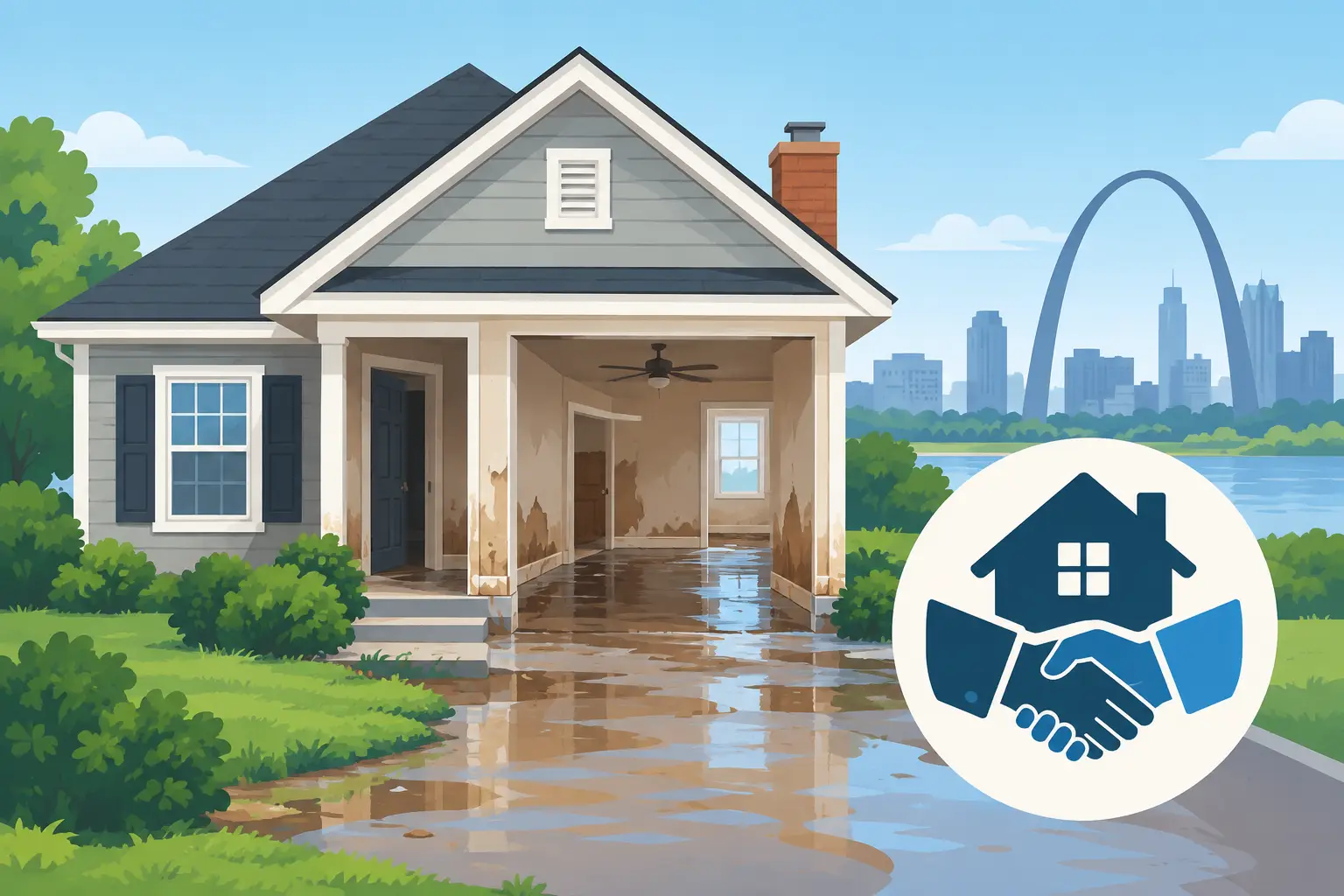
A burst supply line can turn a normal week into a mess of wet drywall, pulled-up flooring, insurance calls, and decisions you did not plan to make. If you need to sell water damaged house St Louis property, you do not have to make every repair before exploring a sale. But the right route depends on how serious the damage is, what you can afford to handle, and how much time you have.
Some owners have a small leak that was caught early. Others are dealing with a vacant house where a frozen pipe ran for days, an aging roof that let water into the attic, or a basement that has flooded more than once. The property may still be sellable. The question is whether selling as-is, repairing and listing, or holding onto the home makes the most sense for you.
Start by Protecting People and the Property
If water is still entering the house, address the source first if it is safe to do so. Shut off the water, contact the appropriate emergency professional, and avoid rooms with damaged electrical equipment or unstable ceilings. Water damage can also involve mold, contaminated water, and hidden structural concerns, so a qualified restoration or inspection professional may be worth calling when conditions are significant.
Take clear photos and videos before demolition or cleanup begins. Save invoices, contractor estimates, insurance correspondence, and any records showing when the leak or flood occurred. These documents can help with an insurance claim and give a future buyer a clearer picture of the situation.
You are not required to turn the home into a construction project just to consider selling it. Still, stopping active damage and securing the house can protect its condition while you compare your options.
Can You Sell a Water-Damaged House As-Is?
Yes, a water-damaged home can often be sold as-is. “As-is” generally means the seller does not agree to make repairs as a condition of the sale. It does not mean hiding known problems. Missouri sellers should be candid about material conditions they know about and should use the appropriate disclosures for their situation. If you have questions about disclosure duties, title, probate, or another legal issue, speak with a qualified Missouri real estate attorney or other appropriate professional.
An as-is sale can be practical when the damage is extensive, when the house is inherited or vacant, or when you simply do not want to coordinate restoration crews and listing prep. A direct buyer may evaluate the house in its current condition, including damaged finishes, missing drywall, a wet basement history, or work that still needs to be completed.
That said, as-is does not automatically mean “best deal.” A buyer will consider the likely repair cost, the possibility of damage behind walls or under floors, and the time involved. That uncertainty can affect the offer. A traditional listing after repairs may bring more interest and potentially a higher price, but it also requires money, time, and tolerance for surprises.
Your Main Selling Options
Repair, Then List With an Agent
Listing may be a good fit if the damage was limited, you have funds for repairs, and you are not under a tight timeline. A clean, documented restoration can make it easier for buyers to understand the home and obtain financing. You may also reach a wider buyer pool.
The tradeoff is that repair estimates can grow once contractors open walls or remove flooring. You may pay for cleanup, repairs, staging, holding costs, and agent commissions before knowing the final sale outcome. Buyers can also request inspections and additional concessions.
List the Property As-Is
You can list a damaged home without repairing it. This route may attract investors, contractors, or buyers looking for a project. It can work when the home is marketable but you prefer not to manage repairs yourself.
Expect buyers to ask questions about the cause of the water damage, whether it was remediated, and what records you have. A listing can take time, and an accepted offer may still depend on inspections, financing, or negotiations over repair concerns.
Sell Directly to an As-Is Buyer
A direct sale is designed for owners who want to avoid repairs, cleanup, showings, and agent commissions. Instead of placing the property on the MLS, you discuss the home directly with a potential buyer, who reviews its condition and presents an offer only if the property fits their buying criteria.
This can be especially useful for a house with a failed sewer line, storm-related roof leak, long-term basement moisture, or damage that makes a conventional buyer hesitant. Closing timing can be discussed around your needs, but it depends on the property review, title work, and agreed terms. A free conversation is not a commitment to sell, and not every property will qualify for an offer.
What a Direct As-Is Sale Usually Looks Like
The process is straightforward, but you should still read every document and ask questions. With St. Louis Cash Buyers, it generally begins with a no-obligation conversation about the property, its condition, and your timing.
1. Tell the Story of the Damage
Be direct about what happened. Was it a one-time plumbing leak, repeated flooding, a roof issue, or a problem discovered after a tenant moved out? Share what has been repaired, what remains open, and whether you have photos, estimates, or insurance documents.
You do not need perfect paperwork to start a conversation. Honest details help a buyer assess the property more accurately and reduce last-minute confusion.
2. Review the Property and Terms
A buyer may visit the property or request additional information to understand the scope of work. This is where you can ask whether they expect you to remove belongings, whether there are fees or commissions, how closing costs are handled, and what closing dates may be possible.
Do not focus only on the offer amount. Compare the full terms, including repair responsibilities, contingencies, closing timeline, possession date, and any costs that would come out of your proceeds.
3. Decide Without Pressure
If you receive an offer, you can review it, seek advice, negotiate where appropriate, or decline it. The point of an initial inquiry is to understand an option, not to rush into a contract.
For some owners, a direct sale provides welcome relief from a damaged house. For others, repairing and listing may be worth the extra effort. Both can be reasonable choices.
Questions to Ask Before You Choose
Before agreeing to any path, get clear answers about the parts that affect your bottom line and your timeline. Ask who pays for repairs and cleanup, whether the sale includes agent commissions or other fees, how inspections affect the agreement, and what happens if title issues appear.
If the house is inherited, owned with another person, occupied by tenants, or subject to a mortgage, those facts can affect the process. An estate may need authority to sell before closing. A mortgage payoff may affect what you receive. A tenant situation may require careful planning. These are not reasons to avoid a conversation, but they are reasons to be upfront early.
Also ask yourself whether you have the capacity to manage repairs. A water-damaged house can require decisions about drying, demolition, mold evaluation, plumbing, electrical work, flooring, and paint. The work may be manageable, or it may be more than you want to take on while moving, settling an estate, managing a rental, or dealing with a family change.
Prepare for a Better Conversation
You can make the next step easier by gathering a few basics: the property address, photos of visible damage, any repair or restoration estimates, information about active insurance claims, and your preferred selling timeline. If you know the mortgage balance or whether there are liens, keep that information available too.
Do not worry if the house is cluttered or unfinished. An as-is buyer expects to evaluate condition. What matters most is a clear account of what you know and what you need from a sale.
A water-damaged house is a problem to assess, not a reason for embarrassment. Explore your selling options with St. Louis Cash Buyers. Tell us about your property - no pressure, no obligation.