
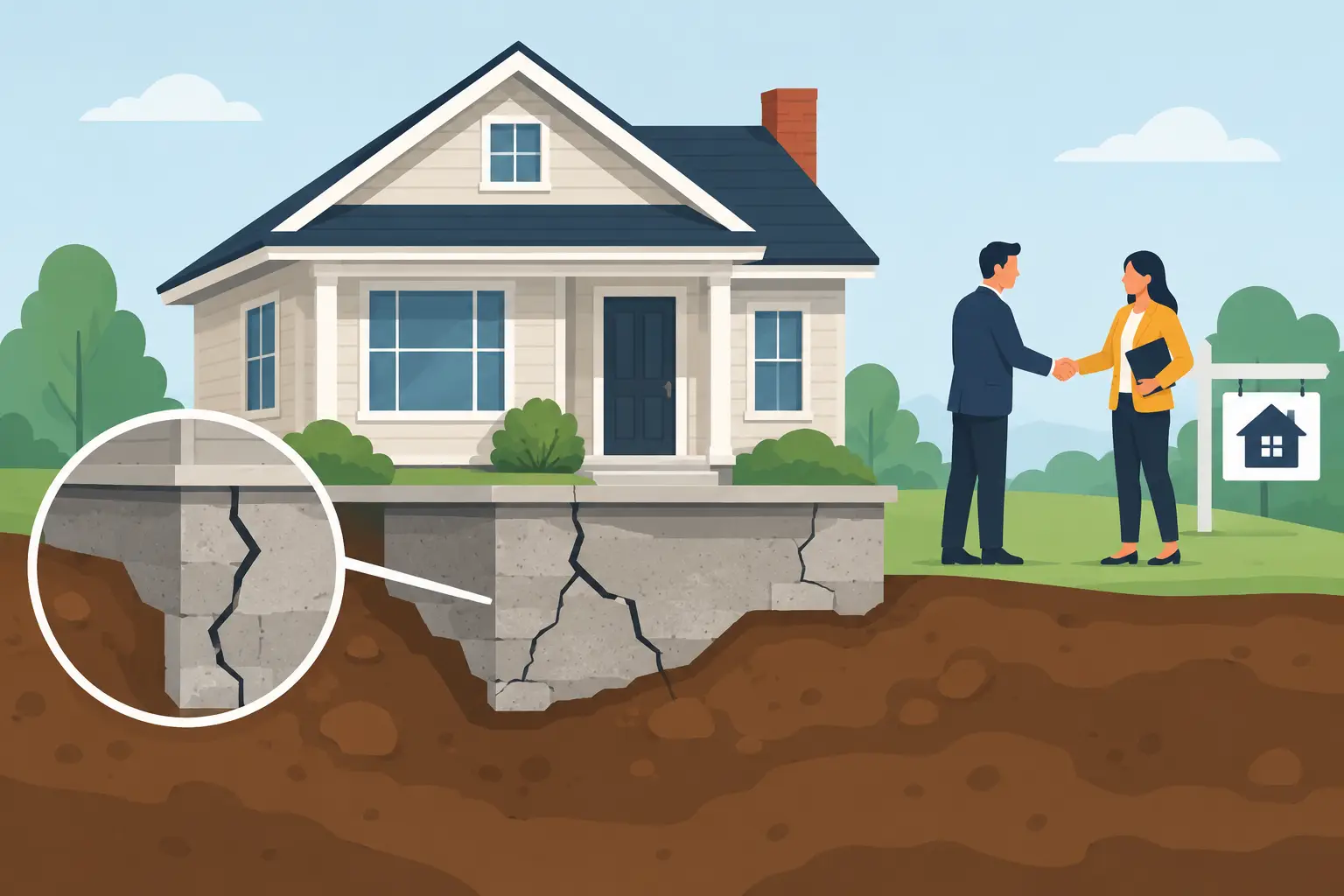
A crack across a basement wall can change the whole conversation about selling. If you need to sell house with foundation problems, you still have options. The right one depends on the extent of the issue, your budget, how quickly you need to move, and whether you want to manage repairs before putting the home on the market.
Foundation concerns can feel overwhelming because they affect buyer confidence, inspections, financing, and your asking price. But a foundation problem does not automatically make a home unsellable. Many Missouri homeowners sell properties with settlement, cracks, water intrusion, bowed walls, or uneven floors every year. The key is understanding the condition, being honest about it, and choosing a sale path that fits your circumstances.
Start by separating a symptom from a diagnosis
Not every crack means a major structural failure. Hairline cracks in concrete, small drywall cracks, or a sticking door can happen for several reasons, including normal settling, seasonal soil movement, moisture changes, or drainage issues. On the other hand, wide horizontal cracks, walls that bow inward, repeated water entry, sloping floors, or doors and windows that no longer close may point to a more serious concern.
Before spending money, consider whether you need more clarity. A qualified structural professional or foundation specialist may help you understand what is happening and what repairs, if any, are recommended. Keep copies of reports, estimates, warranties, and past repair records. Those documents can help a buyer evaluate the property instead of guessing at the problem.
You do not always need a full engineering report to sell. If the house is being sold as-is to a buyer who is prepared to assess the condition, an honest description of what you know may be enough to start the conversation. Still, a diagnosis can be worthwhile when the issue is unclear or when you are considering repairs or a traditional listing.
Three ways to sell a house with foundation problems
There is no single best answer for every property. Compare the likely proceeds, time involved, and work each route requires before deciding.
Repair first, then list the home
Repairing the foundation before listing may make sense if the home is otherwise in good condition, you have time to complete the work, and local buyer demand supports a conventional sale. Some retail buyers and their lenders are more comfortable when a documented repair has already been completed.
The tradeoff is cost and uncertainty. Foundation work can uncover related issues, such as drainage problems, damaged finishes, or plumbing concerns. You may also spend money upfront without knowing whether the final sale price will fully make up for the repair, carrying costs, and time on the market.
If you take this route, ask about the repair scope, warranty transferability, permits if applicable, and whether any landscaping, drywall, or flooring restoration is included. A low estimate is not always the lowest total cost.
List as-is with an agent
You can list a house as-is. “As-is” generally means you do not plan to make repairs, not that you can hide known defects. Missouri sellers should provide required disclosures honestly and seek advice from a qualified real estate professional or attorney if they have questions about their specific responsibilities.
An agent can market the home to buyers looking for a project or investment property. This route may bring more exposure and could be a good fit if you can wait for showings, inspections, buyer negotiations, and financing decisions. However, some buyers may ask for a price reduction, repair credit, or inspection contingency. A lender may also require certain conditions to be addressed before approving a buyer’s loan.
Consider a direct as-is sale
A direct sale can be practical when you do not want to repair, clean out, stage, or repeatedly show the property. This is often worth considering for an inherited house, a vacant home, a difficult rental, or a property where the foundation issue is only one part of a larger repair list.
A direct buyer reviews the property and makes an offer based on its current condition, repair needs, resale potential, and agreed terms. You may avoid agent commissions and the usual repair negotiations, but the offer will account for the cost and risk of the work the buyer is taking on. That means convenience and certainty of process can come with a lower price than a fully repaired home might bring in a strong retail sale.
For some owners, that tradeoff is reasonable. For others, taking the time to repair and list may be better. The best choice is the one that leaves you with a realistic plan, not the one with the most appealing headline number.
What buyers will want to know
Whether you sell through an agent or directly, clear information makes the process easier. Gather what you have before discussing the property:
- The age of the home and when you first noticed the issue
- Photos of cracks, water damage, uneven areas, or repaired sections
- Previous foundation, waterproofing, drainage, or sewer work records
- Inspection reports, contractor estimates, and transferable warranties
- Information about known water intrusion or flooding in the basement
- Your mortgage payoff, property taxes, liens, or ownership questions
You do not need a perfect file. Many sellers do not have every record, especially after an inheritance or years of rental ownership. Simply separate what you know from what you do not know. That is more useful than trying to minimize the problem or making promises about repairs you cannot verify.
Pricing a house with foundation concerns
A foundation issue affects value, but not in a simple dollar-for-dollar way. Buyers consider the estimated repair cost, the chance that additional work will be found, the inconvenience of construction, and the home’s overall location and condition.
For example, a repair estimate might be one number, while a buyer’s price adjustment is higher because they must also plan for water management, finished-basement repairs, permits, delays, and the risk of surprises. A home with documented work and a transferable warranty may be easier to price than a home with visible symptoms and no diagnosis.
If you are comparing offers, look beyond the purchase price. Ask whether the buyer expects inspection concessions, whether financing is involved, who pays closing costs under the proposed terms, and how long the sale may take. A lower offer with no repair requests and a closing date you choose may be more workable than a higher offer that depends on financing and a long inspection process.
Questions to ask before accepting an offer
A good offer should be clear, not rushed. Whether you work with an agent, an individual buyer, or a local homebuyer, ask how the buyer plans to purchase the property and what conditions are attached.
Find out whether the offer is subject to financing, appraisal, inspection, or a contractor review. Ask what happens if the buyer finds additional foundation work after the initial walkthrough. Confirm the proposed closing date, any earnest money terms, and whether you will need to remove belongings or make repairs before closing.
If the property is inherited, owned by several family members, in a divorce, or connected to a trust or estate, the authority to sell may need to be clarified before closing. A title company and qualified legal or tax professionals can help with questions that are specific to your situation.
A simple path forward
You do not have to decide immediately whether to repair, list, or sell as-is. Start with the facts: identify the visible issues, gather your paperwork, and decide what you can realistically spend in time and money. Then compare your likely options without assuming that a faster sale is always better or that repairs are always necessary.
For owners in St. Louis City, St. Louis County, or St. Charles County, an as-is conversation can provide a useful point of comparison. St. Louis Cash Buyers can review the property’s condition and your timing, then discuss whether a direct purchase may fit. An inquiry is free and carries no obligation to accept an offer.
Explore your selling options with St. Louis Cash Buyers. Tell us about your property at https://stlcb.com/discover/ - no pressure, no obligation.