
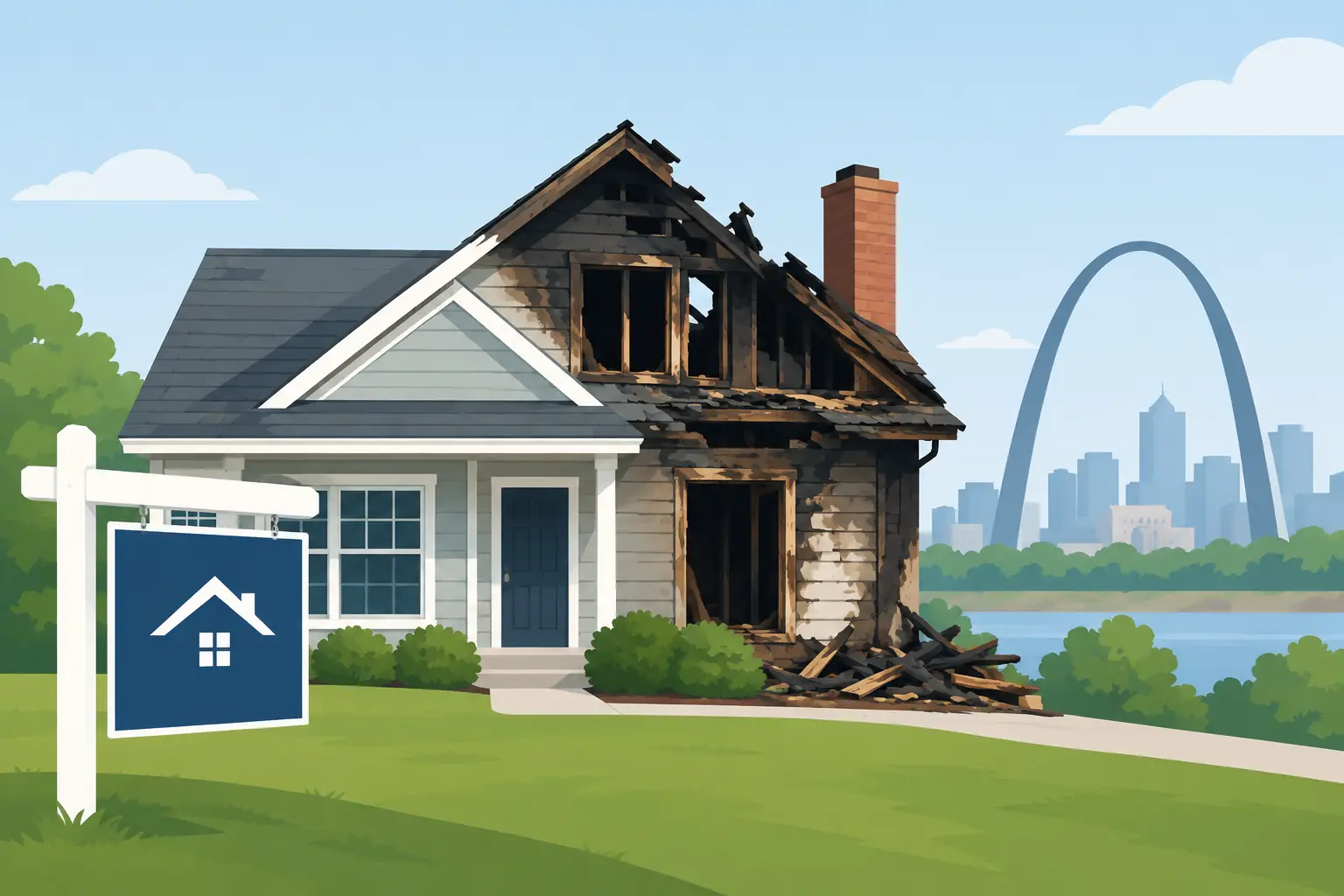
A house fire can turn a familiar property into a long list of decisions: secure the building, talk with the insurer, sort through damaged belongings, and figure out whether rebuilding makes financial sense. If you need to sell fire damaged house Missouri property, you do not necessarily have to restore it to move-in condition first. But the best path depends on the damage, your insurance situation, your timeline, and how much work you are realistically willing to manage.
For owners in the St. Louis area, an as-is sale can be a practical option after a fire. It can also mean accepting a lower price than a fully repaired home might bring. Understanding that trade-off early can help you make a clear decision without adding more pressure to an already difficult situation.
Start With Safety, Records, and Insurance
Before thinking about buyers, make sure the property is safe to enter. Fire damage is not always obvious from the street. Heat can weaken framing, water used to put out the fire can create mold concerns, and smoke residue can travel well beyond the room where the fire started. Do not enter a damaged home until local officials or a qualified professional says it is safe.
Gather what you can while the details are fresh. Keep copies of the fire report, insurance correspondence, photos, videos, estimates, and receipts for emergency work such as board-up or temporary securing. These records can help you understand the condition of the property and answer reasonable questions from potential buyers.
If you have an insurance claim, read your policy and speak with your adjuster before signing a sale agreement. A sale does not automatically determine who receives insurance proceeds or whether further payments are available. That can depend on the policy, the claim status, and the terms of the sale. If the situation is unclear, an insurance professional or attorney can explain your specific position.
Your Main Options After a House Fire
There is no one right answer for every fire-damaged property. Most owners consider repairing and keeping the home, repairing before listing, listing it as-is, or selling directly to an as-is buyer.
Repair and list through an agent
A repaired house may appeal to more buyers and could bring a higher sale price. This route can fit when the damage is limited, insurance funds are available, you have time to oversee contractors, and the expected value after repairs justifies the cost and effort.
The downside is uncertainty. Repair estimates can change after walls, flooring, or electrical systems are opened up. You may also need to coordinate permits, inspections, cleaning, contractors, and a conventional buyer's inspection after the work is complete. A traditional listing also commonly involves agent commissions, seller preparation, showings, and negotiations.
List the home as-is
You can put a fire-damaged house on the market without repairing it. This may expose the property to a wider buyer pool than a direct sale, especially if the location or lot has strong appeal. Still, buyers using financing may face lender requirements tied to the home's condition. The property could take longer to sell, and buyers may request inspections, credits, or price reductions.
An experienced local agent can tell you whether an as-is listing is likely to make sense for the condition and neighborhood. Ask for a realistic discussion of the likely buyer pool, probable time on market, and costs that could still fall to you before closing.
Sell directly in its current condition
A direct buyer may purchase a property without asking you to complete repairs, clean out damaged contents, host showings, or pay agent commissions. This can be useful when the house has major smoke, water, structural, or fire damage and you do not want to manage a renovation.
Direct sales are not automatically the best financial choice. The buyer takes on repairs, risk, holding costs, and resale uncertainty, so the offer may be lower than the projected retail value of a repaired house. What matters is the net result and the workload you avoid, not just the number shown in an offer.
What an As-Is Sale Actually Means
Selling as-is generally means the buyer is agreeing to take the property in its present condition. It does not mean a seller should hide known problems. Missouri sellers may still have disclosure responsibilities, and the details can vary based on the type of property and transaction. When in doubt, get advice from a qualified real estate attorney or other appropriate professional.
Be direct about what you know. Share the date of the fire, the affected areas, whether the home was boarded up or secured, the status of insurance, and any reports or estimates you have. A buyer may still want to inspect the property or review documents before making or finalizing an offer. That is normal.
If personal belongings, furniture, debris, or damaged materials remain inside, ask early whether the buyer expects the house emptied. Some as-is buyers may be willing to take on cleanup, while others may adjust their offer or require certain items removed. Get that point in writing rather than assuming.
How to Sell a Fire Damaged House in Missouri Without Guesswork
The most useful first step is a simple property review. You do not need to have every document or repair estimate ready before asking about your options. A buyer or agent can usually begin with the address, the basic fire history, photos if available, current occupancy, and your preferred timing.
Then compare the options using the same questions. What repairs are needed beyond visible fire damage? Is there an insurance claim still open? Will there be a mortgage payoff, tax balance, or other lien to address at closing? Is the house vacant, tenant occupied, inherited, or tied to an estate? These issues do not necessarily prevent a sale, but they can affect the process and timeline.
For inherited property, make sure you know who has authority to sell. A will, trust, probate proceeding, or multiple heirs can change who must sign. For a rental, consider the lease, tenant access, and any local requirements before scheduling inspections or a closing. These are situations where a probate, real estate, or landlord-tenant professional may be worth consulting.
Questions to ask a direct buyer
A pressure-free conversation should give you useful information, not force a quick decision. Ask whether the buyer is purchasing directly or assigning the contract, what inspections they need, whether their offer is based on a walkthrough, and which closing costs they expect to cover.
Also ask what happens if new damage is found, whether you can choose a reasonable closing date, and whether you must remove belongings. Review any agreement carefully before signing. A no-obligation conversation is only an inquiry. You remain in control until you choose to sign a purchase agreement.
A Simple Three-Step Path Forward
First, secure the property and collect your records. Keep the home protected from weather and unauthorized entry, while saving reports, photos, insurance information, and any contractor estimates.
Second, get more than one perspective if you have the time. You may want a repair estimate, an agent's as-is listing opinion, and a direct purchase offer. Compare likely net proceeds, time, repairs, commissions, cleanup, and the risk of delays.
Third, choose the option that fits your real situation. A full repair may be worthwhile for one owner. Another may value a sale without repairs, repeated showings, or contractor coordination. Neither choice is a failure. The goal is a workable next step for the property and for you.
St. Louis Cash Buyers can discuss an as-is purchase option for fire-damaged homes in St. Louis City, St. Louis County, and St. Charles County, subject to property review and agreed terms. Bring the questions you have, take the time you need, and choose the path that leaves you with the clearest way forward.